
A shopping day in Ginza: where to go, and how to carry it all
Ginza is Tokyo's grand shopping avenue: flagship stores of every luxury house, Japan's oldest department stores, and some of the most beautiful shops for stationery, knives and tea. It is compact enough to walk, and big enough to fill a whole day and several bags. Here is how to plan it.
Beyond Ginza: luxury vintage in Omotesando and Aoyama, a whole shopping day with a driver.
The essentials
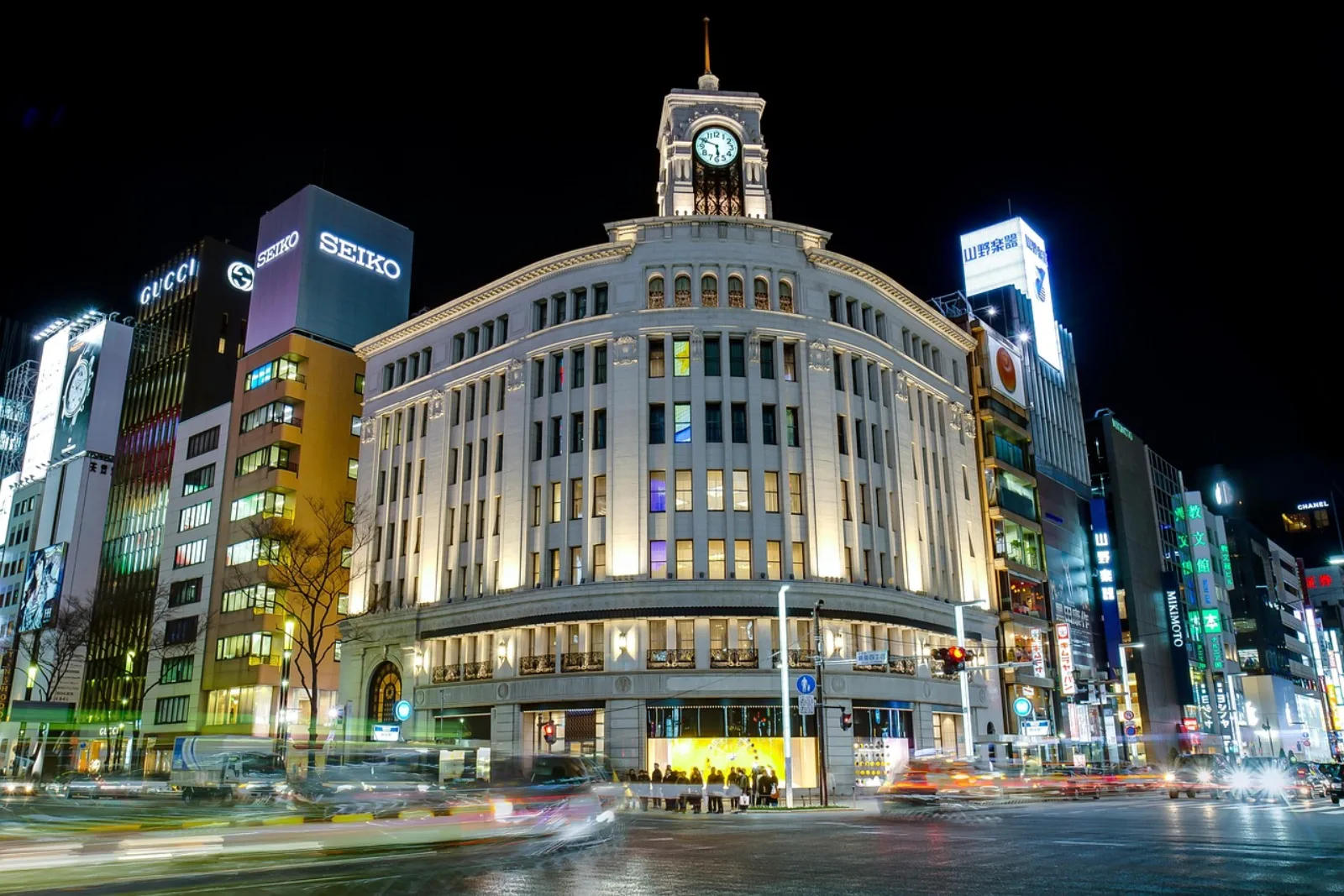
Ginza Six is the largest complex, with fashion, design and a rooftop garden. The Uniqlo flagship on Chuo-dori spreads over many floors and carries ranges you will not find elsewhere. Itoya is a tower of stationery, and Mitsukoshi and Matsuya are classic department stores whose basement food halls are a destination in themselves. The Wako clock tower on the main crossing is the symbol of Ginza, and Ginza Sony Park, reopened in 2025, hosts art and music.
The weekend pedestrian zone
On Saturdays, Sundays and public holidays, Chuo-dori closes to traffic from midday until late afternoon and becomes a wide promenade. It is the best time to stroll and the busiest time in the shops; weekday mornings are calmer if you want to try things on in peace.
Tax-free from November 2026
From 1 November 2026 tax-free shopping in Japan works as a refund. You pay the price including 10 percent consumption tax, keep your receipts and register your purchases, and the tax is refunded at customs when you leave Japan, before check-in. Bring your passport when you shop, because it is still recorded at the till.
Where to eat between shops
Ginza is full of excellent lunch counters for sushi, tempura and tonkatsu, often far better value at midday than at dinner. The department store food halls are perfect for a quick bite or a box of wagashi to take home, and the top floors of the big stores have quiet restaurants with views.
By car, and the price
Parking in Ginza is scarce and expensive, and bags multiply fast. A chauffeur by the hour drops you at each store, keeps your shopping in the car and collects you at the door, and can add Nihonbashi or Omotesando to the same afternoon. It is from ¥16,000 per hour with a two hour minimum, and a Ginza shopping day usually takes four to five hours. Your chauffeur can speak English, Italian, Spanish, French or Japanese, at the same price.
Frequently asked questions
What are the best places to shop in Ginza?
Ginza Six, the Uniqlo flagship on Chuo-dori, Itoya for stationery, and the Mitsukoshi and Matsuya department stores with their food halls.
When is Ginza a pedestrian zone?
On Saturdays, Sundays and public holidays, from midday until late afternoon, Chuo-dori closes to cars.
How does tax-free shopping work in Japan from November 2026?
You pay the full price including consumption tax, keep your receipts, and get the tax refunded at customs when you leave Japan. Bring your passport when you shop.
Is it easy to park in Ginza?
No. Parking is limited and expensive, which is why many visitors use a chauffeur who drops them at each store and waits with the shopping.