
Vintage shopping in Tokyo: which neighbourhood, and how to see three in one afternoon
Tokyo is one of the best cities in the world for vintage and second-hand clothing, and the shops cluster in a few neighbourhoods, each with its own character. Shimokitazawa is the classic, Harajuku is the place for designer resale, Koenji is cheaper and more local, and Shibuya has big resale stores next to the station. Here is how to choose, and how to fit two or three into one afternoon.
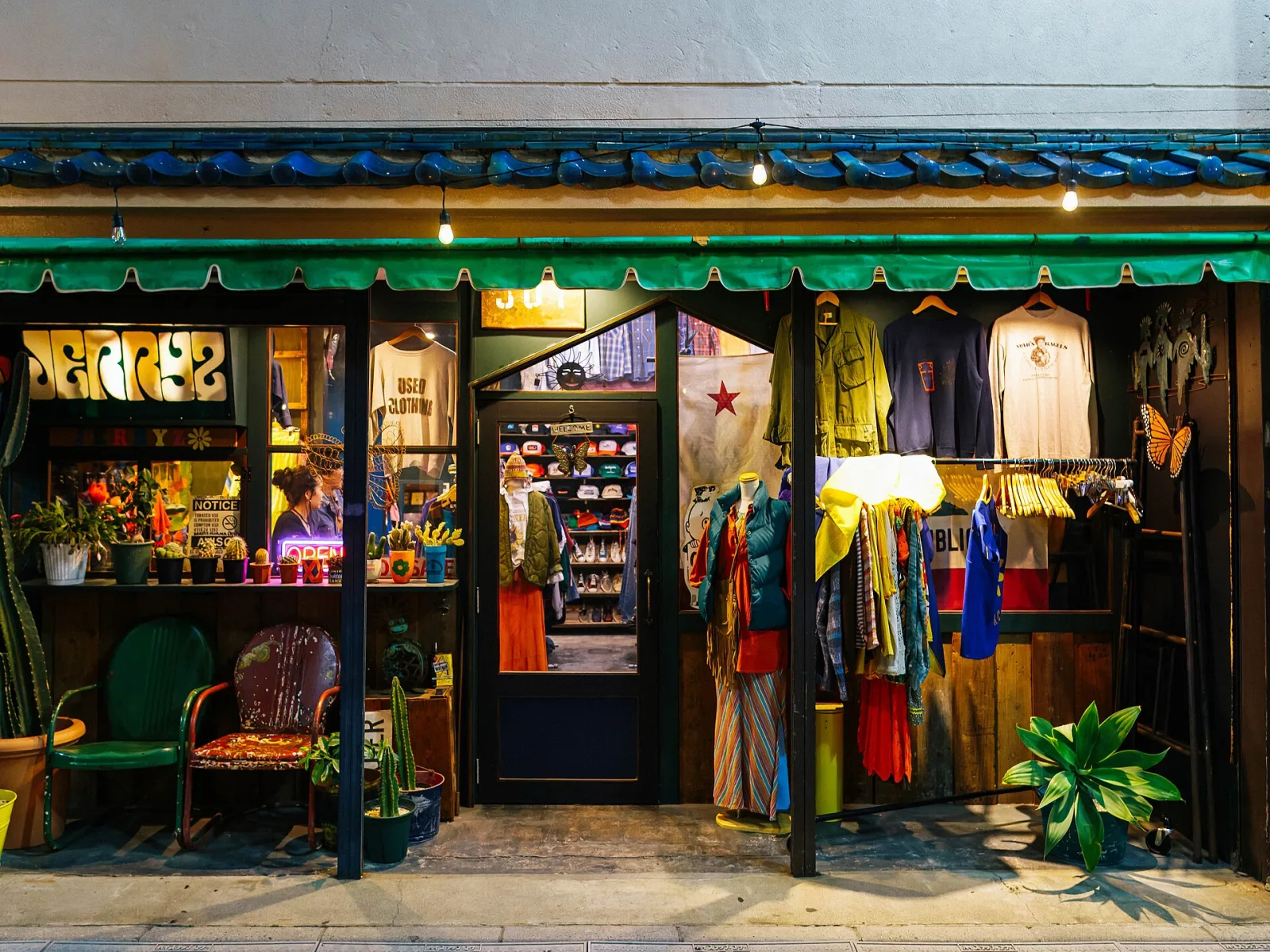
Shimokitazawa, the classic
More than a hundred vintage shops are packed into a few blocks around the station, most of them in Kitazawa 2 and 3-chome. Flamingo has several shops of American vintage from the 1940s to the 1980s, Chicago is large and mixed with a big used kimono corner, and New York Joe Exchange, set in a former public bathhouse, sells clothes brought in by customers at around ¥2,000 on average. 2nd Street has more than one shop here, including a vintage concept store near the east exit. Shimokita Senro-gai, built over the old Odakyu tracks, adds newer low-rise shops and cafés at Reload and Bonus Track.
Harajuku: Cat Street and Ura-Harajuku
Skip Takeshita-dori for vintage. The good shops are in the backstreets of Ura-Harajuku and along Cat Street, the walkway that runs from Omotesando towards Shibuya. This is the area for designer second-hand: Ragtag sells Japanese designers such as Comme des Garçons, Yohji Yamamoto and Issey Miyake, Kindal deals in imported and Japanese labels, and Berberjin is known for American vintage, especially denim and leather. Expect higher prices than in Shimokitazawa, with the condition of each piece marked on the tag.
Koenji, cheaper and more local
Koenji, on the JR Chuo line west of Shinjuku, is smaller, cheaper and less touristy, with a retro and punk streak. From the south exit the covered PAL arcade leads into Look Street, about 500 metres of mostly independent shops; on the north side, Junjo shopping street mixes antiques, used books and second-hand clothes. Safari, in Koenji since 2001, runs several shops here and is the address for rare American vintage, with most pieces above ¥10,000. Some small shops open only in the early afternoon, and many close on Mondays or Tuesdays.
Shibuya, big resale stores
Around Jinnan and Udagawacho, a short walk from the station, Shibuya has large resale stores where you can see a lot in little time. Ragtag Shibuya carries Japanese designers and luxury labels, 2nd Street on Spain-zaka has brand names and walls of sneakers, Komehyo Shibuya spreads over several floors with classic vintage and luxury bags, and Bingo in Shibuya Modi mixes Japanese designer and archive pieces with jackets and denim from a few thousand yen. Shibuya joins Harajuku easily on foot through Cat Street. In Jinnan, Nude Trump has sold vintage since 1988, mostly pieces from the 1990s and 2000s such as biker jackets, leather and sports shirts, and it opens in the afternoon; its sister shop Hypnotique is the women's side.
Prices, opening hours and tax-free
Bargain racks start at a few hundred yen, most chain and thrift pieces cost a few thousand yen, and curated American vintage or designer labels go well above ¥10,000. Chains usually open around 11:00 and some independent shops only around 13:00, and most close around 20:00 or 21:00, so there is no point in an early start. Weekdays are much calmer than weekends. Larger stores such as Ragtag and 2nd Street usually offer tax-free. From 1 November 2026 tax-free shopping in Japan works as a refund: you pay the price including 10 percent consumption tax, keep your receipts and register your purchases, and the tax is refunded at customs when you leave Japan, before check-in. Bring your passport when you shop. Small shops may not offer tax-free, and some take cash only.
By car, and the price
Shimokitazawa and Koenji are best on foot: the lanes are narrow and no car can follow you from door to door. A chauffeur handles the part in between. He drops you at the edge of each area, waits or meets you at another corner, keeps your bags safely in the car, and links two or three neighbourhoods in one afternoon, for example Harajuku and Shibuya, then Shimokitazawa, a route guests often ask for. He is your driver, not a stylist or shopping guide, so the choosing stays with you. It is from ¥16,000 per hour with a two hour minimum, tolls, parking and fuel included, and for a three area vintage afternoon, plan on about four to five hours. Your chauffeur can speak English, Italian, Spanish, French or Japanese, at the same price.
Frequently asked questions
Where is the best vintage shopping in Tokyo?
Shimokitazawa for the widest choice of vintage, Cat Street and the backstreets of Harajuku for designer resale, Koenji for lower prices and a local feel, and Shibuya for large resale stores near the station.
Is Shimokitazawa or Koenji better for vintage?
Shimokitazawa has more shops and more variety; Koenji is smaller, cheaper and less touristy. With a car you can see both in one afternoon.
What time do vintage shops open in Tokyo?
Chains usually open around 11:00 and some independent shops only around 13:00, and most close around 20:00 or 21:00. Some small shops close on Mondays or Tuesdays, so check each shop before you go.
Can I shop tax-free in Tokyo vintage stores?
Usually yes at larger stores such as Ragtag and 2nd Street. From November 2026 you pay the tax at the till and get it refunded at customs when you leave Japan. Bring your passport; small independent shops may not offer it.