
How to visit Daikoku Parking Area without a car
Daikoku PA is the most photographed car meeting spot in Japan and one of the hardest to simply turn up at. It is a service area inside the expressway network, which means there is no pedestrian entrance, no station within walking distance, and no legal way to arrive on foot. This guide covers the options that actually work, what the evenings are really like, and the part most articles leave out: the entrance is closed more often than not.
Where it is, and why that matters
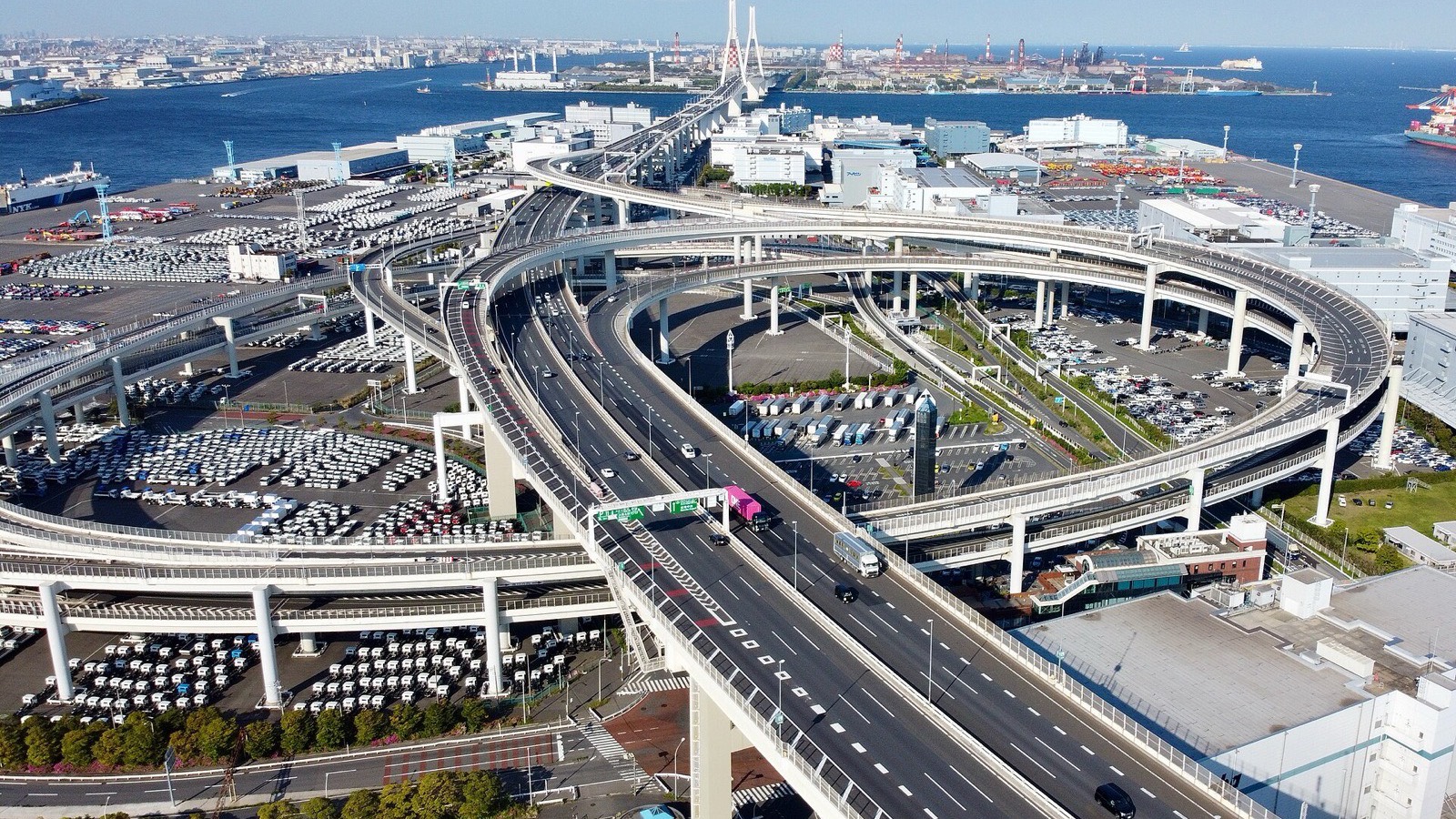
Daikoku Parking Area sits on the Bayshore Route in Tsurumi ward, Yokohama, at the foot of the Yokohama Bay Bridge, entered through a long looping ramp that has become an image in its own right. It is roughly 30 to 40 minutes from central Tokyo by expressway. The important part is that it is inside the toll network: you enter it from the expressway and you leave it onto the expressway. It is not a car park you can reach from a normal street.
The four ways people try to get there
Driving yourself works if you already have a car or a rental, but it means an international permit, a night on unfamiliar expressways, and finding the correct ramp. A taxi can take you in, but the driver will not wait for an hour or two without meter charges, and getting a taxi back out of an expressway service area late in the evening is not something to rely on. An organised tour works and is often the cheapest way for a solo visitor, though you travel to someone else's schedule. A private chauffeur is the most flexible: the car goes in with you, parks, and stays for as long as you want. Walking, cycling, or being dropped nearby and approaching on foot are not options, and attempting them means walking on an expressway.
When to go, and when not to
Friday and Saturday evenings are by far the busiest, with cars beginning to gather from around 17:00. But that popularity is exactly what causes the problem below, so a weeknight can be a better experience than a Saturday: fewer cars, but a far better chance of actually getting in. Rain empties the place almost entirely. Nothing is scheduled and nobody is organising it, so any evening can be quiet for no particular reason.
The part most guides skip: the entrance closes
When the area fills, or when noise brings complaints, the police close the entrance to incoming vehicles. On Friday and Saturday this commonly happens between 19:30 and 20:00, on weeknights between 20:30 and 21:00, and it typically stays shut until around midnight. The overhead motorway information signs show 大黒PA 閉鎖 in red when it happens. This is the single most common reason a visit fails: people arrive at 22:00 because that sounds like the right time for a car meet, and find the ramp blocked. Arrive before 19:00 and your odds change completely.
What you will actually see
On a good evening the upper deck fills with Japanese performance cars, Skylines and GT-Rs, Supras, RX-7s, Silvias, alongside drift and time attack builds, kei trucks and vans customised past the point of reason, American muscle, and sometimes European supercars. It is a car park, not an event: there is no stage, no commentary and no entry fee. People stand around, talk, and look at each other's cars. That is the whole thing, and it is the reason it is worth seeing.
How to behave, so it stays open
Daikoku has been closed repeatedly over the years because behaviour got out of hand, so the etiquette is not decoration. Photograph cars freely, but ask before photographing people. Never touch, lean on or open someone's car. No revving, no burnouts, no loud engine noise near the buildings, since noise complaints are the usual trigger for a closure. Keep the driving lanes clear, buses and delivery vehicles use this area for its actual purpose. Take your rubbish with you. If you are a guest in someone else's culture, behave like one.
Combining it with the rest of the evening
Daikoku is close to Yokohama, so the natural shape of an evening is the Bayshore drive out, the parking area while it is still light and still open, then down into Yokohama for Minato Mirai after dark, the Red Brick Warehouse and the harbour front, with dinner or Chinatown if you want it. That way the evening still works even if the entrance turns out to be shut.
Frequently asked questions
Can you get to Daikoku PA by train?
No. There is no station within walking distance and no pedestrian entrance, because the parking area is inside the expressway network. You have to arrive in a vehicle.
Is Daikoku PA free to enter?
Yes, there is no entry fee and no ticket. The only cost is getting there, plus the expressway tolls for whoever is driving.
What time should I arrive at Daikoku?
Before 19:00 if you can, and earlier on a Friday or Saturday. The entrance is often closed from 19:30 to 20:00 on weekend evenings and 20:30 to 21:00 on weeknights, usually staying shut until midnight.
Is the Daikoku car meet legal?
The parking area is a public expressway facility and being there is perfectly normal. What is not legal, and not tolerated, is racing, burnouts and excessive noise, which is why the police close the entrance when it gets out of hand.
Is Daikoku PA safe for tourists?
Yes. It is a well lit service area with facilities and a friendly crowd of enthusiasts. Ordinary courtesy, and asking before photographing people, is all that is required.
Do I need to speak Japanese?
It helps but it is not necessary. Most people are there for the cars, and enthusiasm translates. A driver or guide who speaks Japanese makes conversations with owners much easier.