
Kappabashi and the Japanese knife: where to buy, how to choose, how to get it home
Kappabashi, officially Kappabashi Dougu Street, is where Tokyo's chefs buy their tools, and the best place in the city to choose a Japanese kitchen knife. One long street of knife shops, tableware, plastic food samples and every kitchen gadget imaginable, a few minutes from Senso-ji. Here is how to plan it, choose well and bring your knife home safely.
Where it is, and what you will find
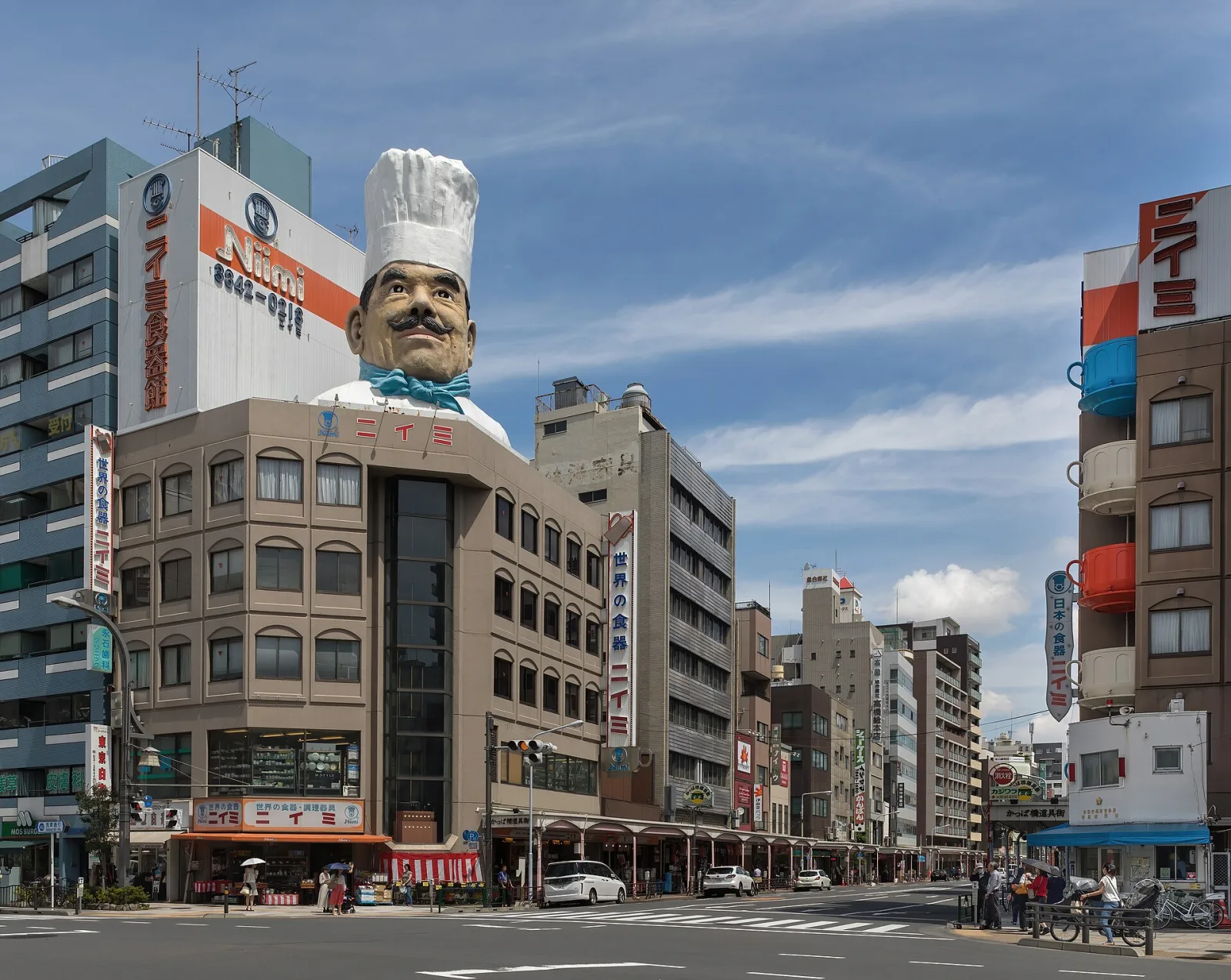
Kappabashi runs for about 800 metres between Ueno and Asakusa, on the west side of Asakusa, with more than 170 shops serving the restaurant trade, and almost all of them sell to visitors too. At the south entrance the Niimi building is crowned by a giant chef's head, the landmark everyone photographs. Along the street you will find Japanese tableware and lacquerware, noren curtains, chef's coats and bamboo wares, and the famous plastic food samples: Ganso Shokuhin Sample-ya sells replica food souvenirs and runs sample making workshops at its Kappabashi store; check its official site for the current workshop.
The knife shops
Kama-Asa, founded in Kappabashi in 1908, has a kitchen tool section and a knife section in its Kappabashi store, which opens at 11:00. Kamata Hakensha began as a knife sharpener in 1923, sells and sharpens knives and engraves your name on the blade by hand, free of charge, while you wait. Tsubaya, one of the oldest knife specialists on the street, displays more than 1,000 knives that you can hold, for home cooks and professionals alike, and says its staff can help in English. Away from Kappabashi, Aritsugu, the historic Kyoto knife house, has a smaller branch in the Tsukiji outer market. Tokyo or Kyoto? Kyoto has Aritsugu's main store; Tokyo gives you many knife shops within a short walk on one street.
Choosing your knife
A gyuto is the Japanese chef's knife, the all-rounder for meat, fish and vegetables. A santoku is shorter, the classic home knife, and a petty knife handles small jobs. Nakiri is for vegetables and yanagiba for slicing sashimi. Carbon steel takes a keener edge but rusts if left wet; stainless is far easier to live with. Tell the shop what you cook and how you sharpen, hold a few in your hand, and ask whether the shop engraves names and how long it takes.
Opening hours and tax-free
Most shops open roughly from 10:00 to 17:00 and most open on Saturdays, but many close on Sundays and public holidays: the street's association says only about 30 percent open on Sundays. Kama-Asa, Kamata Hakensha and Tsubaya list Sunday hours, yet check each official site before you go. From 1 November 2026 tax-free shopping in Japan works as a refund. You pay the price including 10 percent consumption tax, keep your receipts and register your purchases, and the tax is refunded at customs when you leave Japan, before check-in. Bring your passport when you shop, because it is still recorded at the till.
Taking your knife home
Knives travel in checked luggage, never in the cabin. Japanese airports do not allow knives in cabin baggage, and on domestic flights carrying one on board also breaks aviation law. Keep the knife boxed and wrapped as the shop packs it until it is in your suitcase, cushioned in the middle of your clothes. If you travel with hand luggage only, ask the shop about shipping, and check your own country's rules on importing blades before you buy.
By car with Asakusa, and the price
Kappabashi itself is best on foot, with shops door to door along one street. Street parking is limited to 60 minute meters, so your chauffeur drops you at the Niimi chef, waits nearby with the bags and meets you at the north end or wherever you call. Senso-ji is a few minutes away by car, so an early temple visit, Kappabashi once the shops open around 10:00 or 11:00 and lunch in Asakusa fit one easy morning, a route guests often ask for. By the hour it is from ¥16,000 per hour with a two hour minimum, and this morning usually takes three to four hours; a full day of 8 hours, from ¥126,000, can add Tsukiji or Ginza. Tolls, parking and fuel are included. Your chauffeur can speak English, Italian, Spanish, French or Japanese, at the same price. He drives and keeps the shopping safe; choosing the knife is between you and the shop.
Frequently asked questions
What are the best knife shops in Kappabashi?
Kama-Asa, founded in 1908, Kamata Hakensha, which engraves your name for free while you wait, and Tsubaya, with more than 1,000 knives on display.
What are Kappabashi Street hours?
Most shops open roughly from 10:00 to 17:00 and open on Saturdays. Many close on Sundays and public holidays, although the main knife shops list Sunday hours.
Can I take a Japanese knife on the plane?
Only in checked luggage. Knives are not allowed in cabin baggage, so pack yours in your suitcase before security.
Should I buy a Japanese knife in Tokyo or Kyoto?
Both are excellent. Kappabashi in Tokyo puts many knife shops on one street, while Kyoto has the main store of Aritsugu, which also has a branch in Tsukiji.